
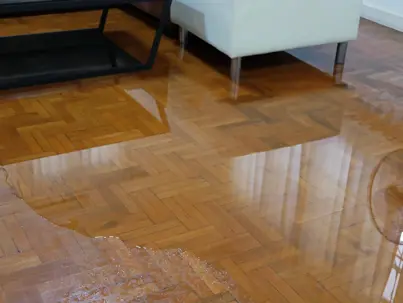
For homeowners’ associations and property managers, dealing with sudden flooding in a clubhouse, common area, or multi-family residential building is always a race against the clock. When a major plumbing failure or storm occurs, the board's immediate question is often whether the expensive underlying materials can be preserved or if a complete replacement is required. Understanding how different materials respond to water damage is essential for making informed decisions that balance restoration costs, project timelines, and the long-term structural durability of your shared community spaces.
Assessing Salvageability Across Different Material Types
Whether a surface can be successfully dried and restored depends heavily on its composition and how quickly professional mitigation equipment is deployed on-site.
Solid Hardwood and Engineered Wood
Genuine wood is highly porous and absorbs moisture quickly, which can lead to cupping, crowning, or buckling if left untreated. However, if IICRC-certified extraction and specialized wood-floor drying mats are used within the first 24 to 48 hours, it is often possible to draw out deep subfloor moisture and preserve the original installation, thereby saving the association substantial replacement costs.
Luxury Vinyl Tile (LVT) and Laminate
While luxury vinyl itself is highly resistant to surface moisture, the primary risk lies beneath the planks. Water can easily migrate through the seams and become trapped between the vinyl and the subfloor, creating an ideal environment for mold growth and structural rot. Laminate, on the other hand, features a pressed-wood core that permanently expands when saturated, meaning it almost always requires removal once exposed to significant loss.
Carpet and Commercial Tile
In common areas with high-traffic commercial carpeting, salvageability depends heavily on the source of the water. Clean water from a supply line can usually be extracted, allowing the carpet to be dried in place, though the underlying padding often needs to be replaced. If the loss involves contaminated water or sewage, industry standards require full removal to protect residents' health and safety.
Streamlining the Restoration and Rebuild Process
Attempting to dry out complex multi-unit flooring installations without professional moisture-mapping technology can lead to hidden structural issues down the line. Unseen moisture left underneath baseboards or within subfloors will eventually compromise the shared walls and structural framing of neighboring units, turning a localized issue into an expansive mold remediation project.
When an unexpected disaster impacts your managed community, partnering with a specialist who understands both immediate mitigation and general contracting simplifies the recovery. Flood Pro provides comprehensive, community-minded solutions that take you from initial high-volume water extraction through code-compliant structural reconstruction, ensuring your neighborhood standards are maintained from start to finish.
Reach out to our specialized team today at (949) 334-2632 to assess your property's needs.